


Turkish Universities Prepare for COP31 with Sustainability Solutions
- Sabancı University has reduced water consumption by 55 percent, while Bilkent University has recovered all of its 2,246 tons of organic waste
- Sakarya University aims to recover critical raw materials from waste batteries, while Hacettepe University conducts research on carbon capture and Kastamonu University works on digital forest mapping
- Artificial reefs are being developed from discarded mussel shells, while carbon sequestration through microalgae is under investigation
- CoHE President Özvar: “The green transformation performance of our universities is reaching an increasingly broader base”
- “We have incorporated the scientific expertise of all 208 of our universities into the COP31 process”
November 5, 2026
Universities in Türkiye are developing solutions to environmental challenges through initiatives ranging from water management and waste recovery to climate technologies and biodiversity conservation. In addition to conservation measures and circular economy models implemented on campuses, research is being conducted on carbon sequestration, the advanced processing of waste, and the protection of natural resources.
The 31st Conference of the Parties (COP31) to the United Nations Framework Convention on Climate Change, which will be hosted by Türkiye, offers an important opportunity to showcase the scientific expertise and best practices of Turkish universities on the international stage.
- Initiatives to Protect Water Resources
Universities are implementing various measures to reduce water consumption and use resources more efficiently. Sabancı University reports that it has reduced water consumption on its campus by 55 percent and ranked first in the world in the UI GreenMetric ranking for its performance in water management. Bolu Abant İzzet Baysal University, meanwhile, has achieved water savings of up to 40 percent through its water efficiency initiatives.
Karabük University uses rainwater collected from rooftops to irrigate green spaces. Yozgat Bozok University, in cooperation with the State Hydraulic Works (DSİ), has completed the construction of Bozok Water Pond on its campus. The pond is expected to store 125,000 cubic meters of water and contribute to the irrigation of an area spanning 180 decares.
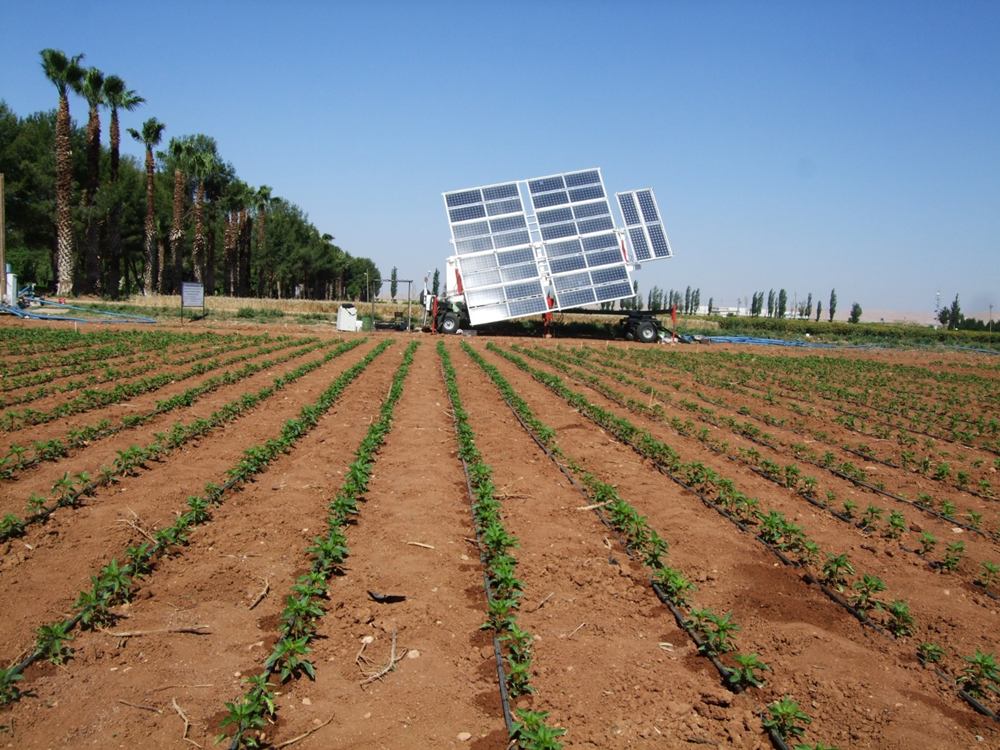
Yıldız Technical University contributes to water conservation through the reuse of rainwater and drainage water, smart irrigation, and drip irrigation systems. According to university data, mains water consumption decreased by 15 percent in 2025 compared with the previous year.
Bursa Uludağ University aims to guide energy efficiency investments by identifying heat losses in campus buildings through thermal imaging and data analysis.
As part of the university’s “Free Your Water from Plastic” project, seven drinking water stations have been installed, and stainless steel bottles have been distributed to reduce single-use plastic consumption.
- Waste Is Being Recovered and Returned to the Economy
During the 2024–2025 period, Bilkent University recovered all 2,246 tons of its organic waste and recycled 99.6 percent of its 516 tons of inorganic waste. According to university data, these initiatives resulted in savings of 982,960 kilowatt-hours of energy and 6,336 cubic meters of water.
Sakarya University is working to separate recyclable waste at its source, compost organic waste, and reduce single-use plastic consumption. The university is also participating in the FREE4LIB project, which aims to recover critical raw materials from end-of-life lithium-ion batteries.
Istanbul Commerce University organizes workshops on the reuse of textile and paper waste. Istanbul Rumeli University’s AI-powered EcoMatch Project aims to return industrial waste to the economy through reuse.
Izmir University of Economics is carrying out AI-supported waste sorting initiatives and projects to develop new products from waste. Siirt University is researching the production of essential oils, hydrosols, and activated carbon from pistachio waste, while Hitit University is conducting research on developing wound dressings and bioplastics from waste materials such as onion peels.
- Climate Technologies and the Protection of Natural Habitats
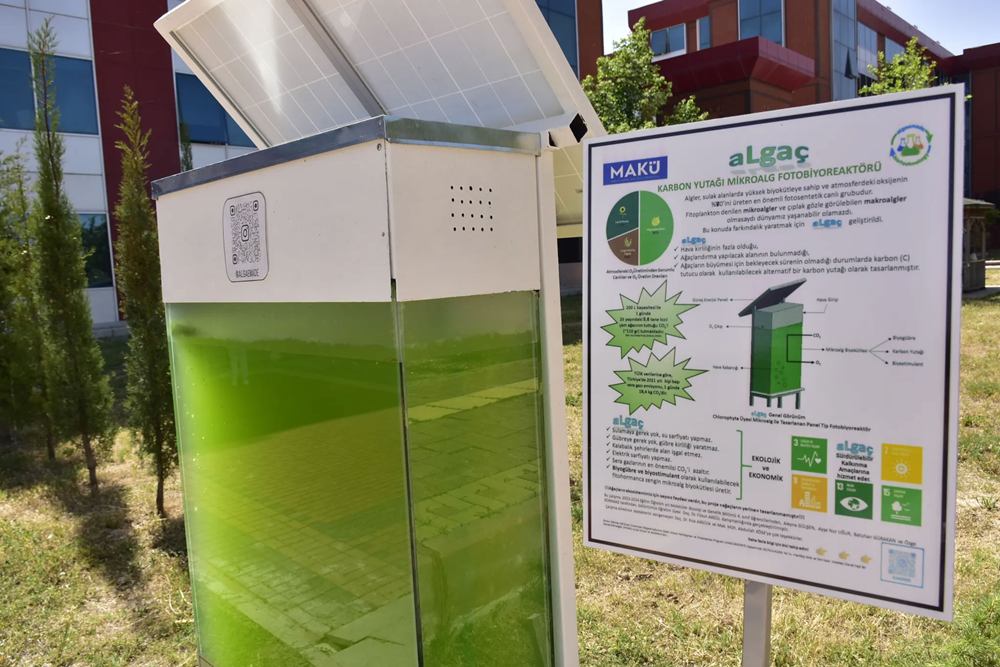
Universities are developing new technologies to combat climate change and protect natural resources. Burdur Mehmet Akif Ersoy University is conducting research on microalgae production and carbon sequestration. Its microalgae culture collection, MAKUMACC, contains approximately 150 species and strains. The “aLgaç” photobioreactor is used to investigate the potential of microalgae biomass production and carbon dioxide sequestration. Through a planned microalgae production facility, the university aims to use microalgae in areas such as wastewater treatment and carbon removal.
Hacettepe University is conducting research on carbon capture, bioenergy, and energy efficiency. Research at Kastamonu University focuses on creating three-dimensional digital maps and inventories of forests, with the aim of contributing to the monitoring of natural resources.
Eskişehir Osmangazi University is conducting research on microplastics, the recovery of valuable metals from electronic waste, water quality, and the protection of wetlands.
The NeSea initiative, developed at İzmir Institute of Technology and Teknopark İzmir, aims to create artificial reefs using biomaterials derived from mussel shells. This initiative brings together the reuse of waste materials and the protection of marine ecosystems.
- Turkish Universities Strengthen Their International Standing in Green Transformation
Universities’ sustainability initiatives are also reflected in international rankings. According to the 2026 UI GreenMetric results, 150 universities from Türkiye were included in the ranking. Türkiye ranked first in Europe and second worldwide in terms of the number of universities placed in the top 200, top 500, and top 1,000. Five Turkish universities ranked in the top 100, 21 in the top 200, 53 in the top 500, and 99 in the top 1,000.
Istanbul Technical University ranked 28th worldwide, while Yıldız Technical University ranked 45th, placing both among the top 50. The ranking evaluates universities’ sustainability performance in areas such as campus and infrastructure, energy, waste management, water use, transportation, and education.
CoHE’s Sustainable and Climate-Friendly Campus Project also supports initiatives in this field. The project aims to improve energy efficiency, expand environmentally friendly practices, and strengthen the concept of sustainable campuses at universities.
- Özvar: “All 208 of Our Universities Will Play an Active Role in COP31”
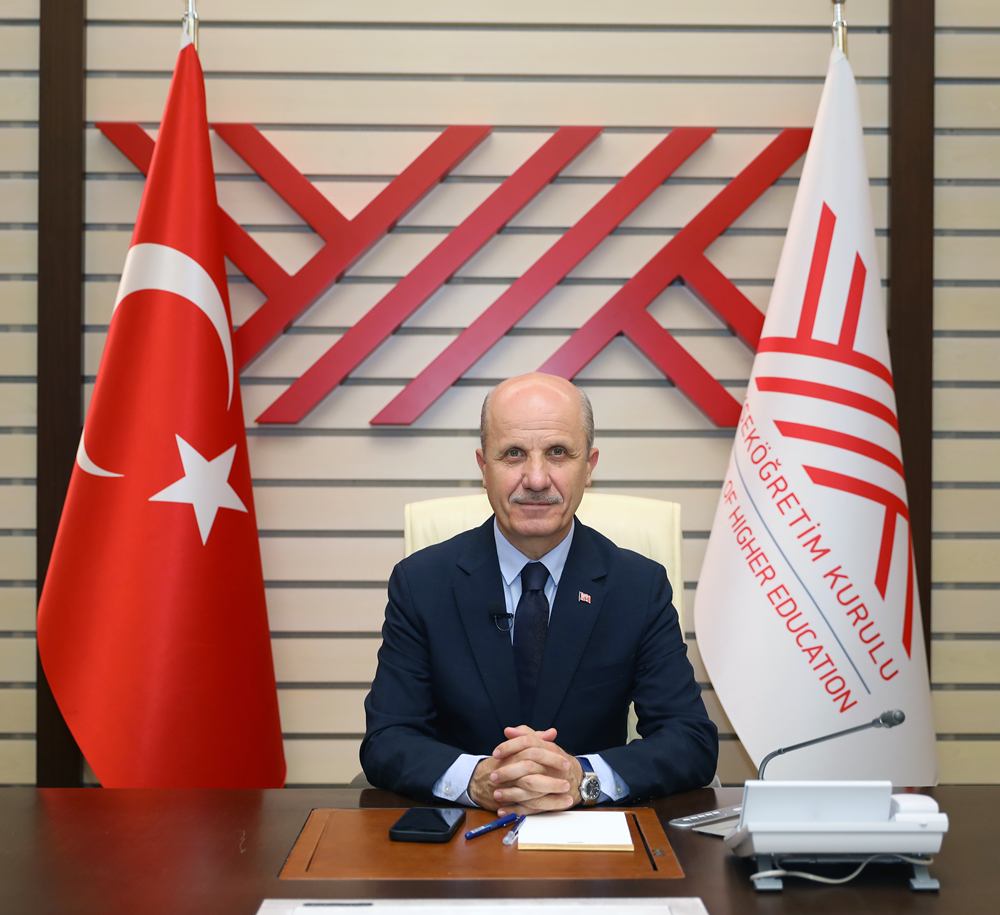
Erol Özvar, President of the Council of Higher Education, stated that the green transformation and sustainability performance of Turkish universities was reaching an increasingly broader base. He noted that Türkiye’s leading position in Europe in terms of the number of universities ranked in the top 200, top 500, and top 1,000 in the GreenMetric ranking was an important indicator of this progress.
Emphasizing that Türkiye was taking determined steps to combat the climate crisis, Özvar said the scientific expertise of universities would make a strong contribution to the COP31 process. “We have incorporated the scientific expertise of all 208 of our universities into the COP31 process. All 208 of our universities will play an active role in this global climate action,” he said.
Özvar stated that CoHE considers green and digital skills to be among the fundamental elements of transformation in higher education. He added that CoHE would continue supporting green transformation initiatives in areas ranging from energy efficiency, water and waste management to sustainable transportation and environmentally friendly campus practices.
The campus initiatives and scientific solutions developed by universities not only help reduce environmental impacts but also provide a platform for sharing Türkiye’s academic expertise in combating climate change with the international community as part of the COP31 process.
Images
Images